Current Research Areas

Genetic screens to identify interferon-mediated viral restriction factors
Interferon (IFN) signaling is a major component of the innate immune response. IFN is a cytokine released by infected cells that triggers an antiviral state by upregulating hundreds of IFN stimulated genes (ISGs), some of which act as viral restriction factors. We recently developed a respiratory cell-focused CRISPR-Cas9 knockout screen to identify host factors with antiviral activity against HCoV-OC43, one of the seasonal human coronaviruses. We are applying the screen technology to other coronaviruses and developing novel screens to understand how host factors, like ISGs, protect cells during viral infection.
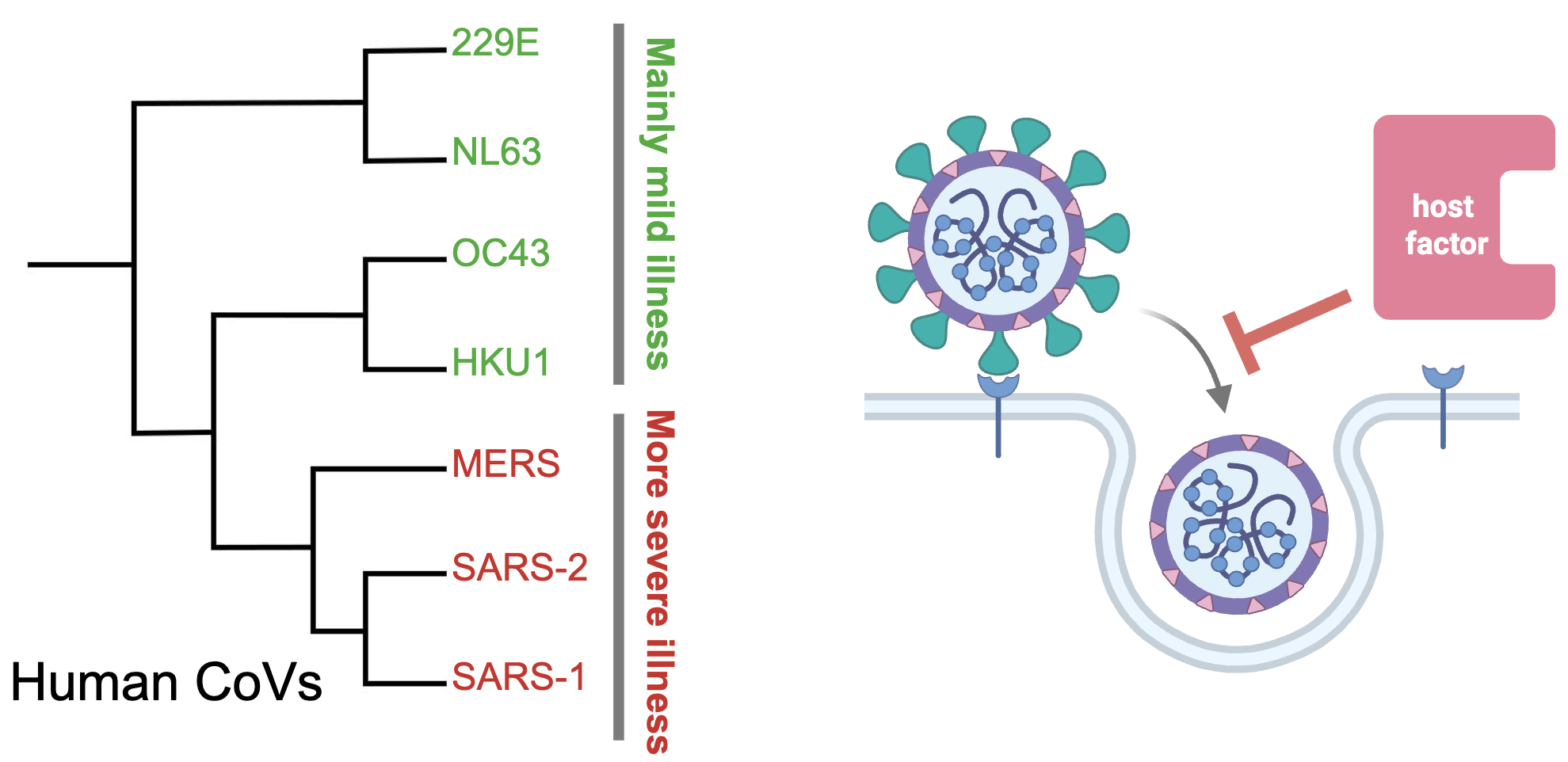
Mechanistic characterization of host proteins that control infection across diverse coronaviruses
The discovery of interferon-stimulated genes (ISGs) with potent antiviral activity has highlighted the potential for development of host-directed interventions that target the innate immune response to block viral infection. The use of IFN as an antiviral therapeutic has led to mixed results clinically, and the possibility of harnessing individual ISGs, activated downstream of IFN signaling, represents a more direct approach. To best deploy ISGs as antiviral effectors, we need to understand their mechanisms and activity across diverse viral families. We use comparative and basic virology studies to learn how host factors like ISGs exert their antiviral activity.
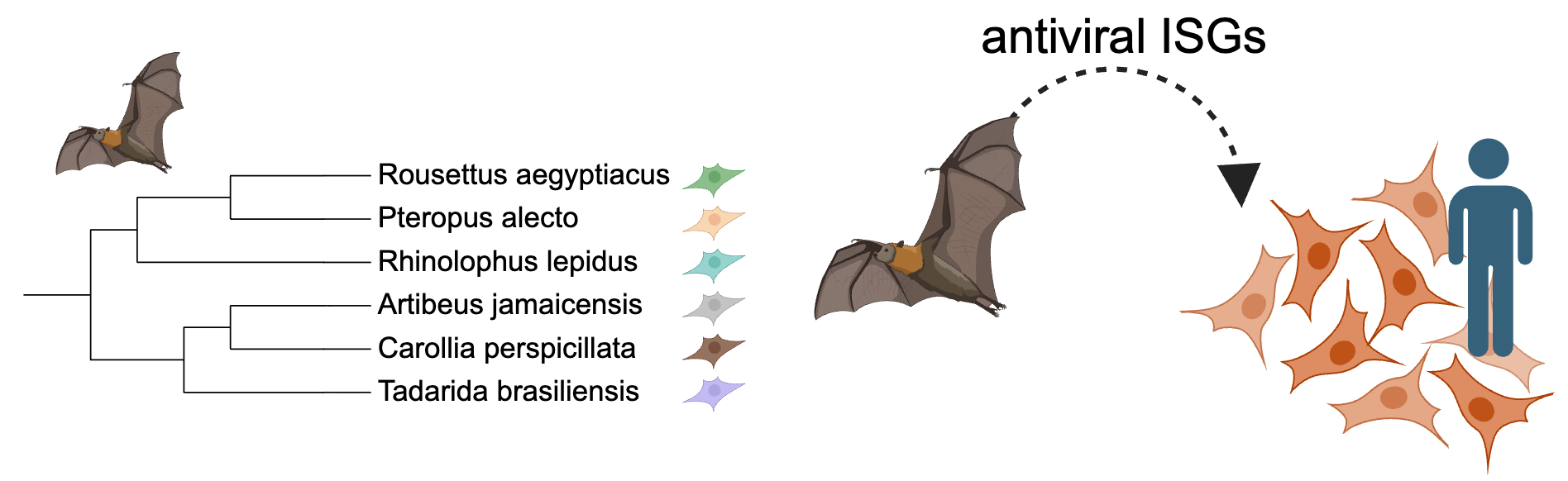
Antiviral and tolerance effectors in reservoir hosts
Several lethal human viruses are thought to have bat progenitors, though bats often do not show overt signs of disease when infected. Innate immune responses like those conferred by Type I interferon signaling are thought to play a role in the control of viral infection in bats, but the specific genes that respond to infection are not entirely clear. We are employing existing bat cell models in customized screening approaches to address this. We are interested in whether reservoir hosts, like bats, may hold clues for enhanced viral control that could be adapted into human cells.